Well, Septic, or Sewer: The Line That Splits Bernardsville in Half
August 13, 2026
August 13, 2026
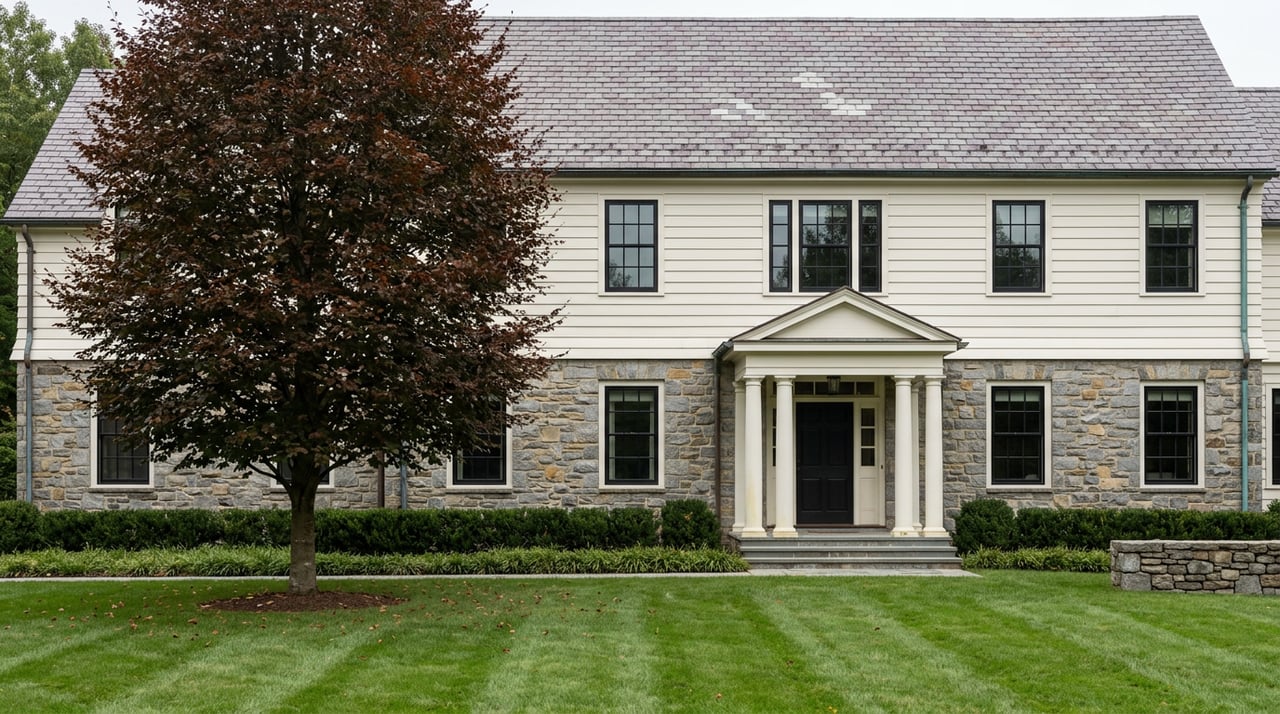
Open a listing for a stone-and-clapboard colonial on a couple of acres in Bernardsville and the sheet will tell you the lot size, the tax bill, the school district. It will not tell you whether the toilets flush into a municipal main or a tank buried somewhere past the treeline. That distinction rarely makes it into a listing description, yet it shapes nearly everything that happens between an accepted offer and a closing table in this borough.
Bernardsville reads as one town on paper. Underground, it is not one town at all.
The borough's own sewer department reports that its treatment plant, sited near the Rose Bowl, maintains 19 miles of sewer mains and six pumping stations that serve nearly 1,600 residences, roughly 55 percent of Bernardsville. That figure comes straight from the utility's own system profile, and it means something close to half the borough's homes sit outside the municipal sewer footprint entirely. In a town built around a mix of walkable in-town streets and large-lot estate sections, that footprint is not spread evenly.
Bernardsville's subdivision ordinance draws the boundary in plain language: sanitary sewers are required "in the three highest density residential zones and in all nonresidential zones and in all other zones where available." Read that closely and it says what anyone who has shopped for a home here already senses. Guaranteed sewer service belongs to the borough's densest residential zones. Everywhere else, including the lower-density zones where Bernardsville's larger, older estate-style properties tend to sit, sewer access exists only where available, which in planning language means it is not promised.
This is the part a median price or a bedroom count will never surface. The homes most associated with Bernardsville's character, the ones tucked into rolling acreage that once drew New York's elite to build country retreats here, are disproportionately the ones running on private septic rather than the municipal system. Properties outside the sewer service area typically pair a septic system with a private well for drinking water, since water and sewer infrastructure tend to follow the same zoning logic in a town like this.
None of that makes a property less desirable. It does mean the due diligence period runs longer, and it introduces cost and timeline variables that a buyer coming from a fully sewered suburb, or a seller who has never sold a septic property before, may not see coming.
New Jersey does not leave well water quality to chance in a real estate transaction. The Private Well Testing Act, in effect since September 2002, requires that untreated groundwater from a private well be tested for up to 43 parameters before a sale closes, with both buyer and seller required to review the results in writing before title can transfer. Because Bernardsville sits in Somerset County, that parameter list includes uranium, a test that state regulation only requires in a specific set of counties. It is not a courtesy step anywhere in New Jersey. It is a named line item on the standard contract, and it will not disappear quietly at the closing table.
Timing matters more than most buyers assume. Results typically take two to three weeks, and if anything comes back above the standard, there needs to be time to install treatment and retest, which is why building in six to eight weeks before a target closing date is the realistic window rather than the hopeful one. Neither the law nor its regulations say who pays for the test or any resulting treatment. That part is left entirely to negotiation between buyer and seller, which means it is worth raising early rather than assuming it will sort itself out.
Septic tells a similar story with different numbers. A pre-purchase septic inspection typically runs $400 to $800 and should include pumping the tank and evaluating the drain field under load. The math that actually matters shows up on the other end of a system's life. Repairing an aging, grandfathered system to keep it limping along might cost $1,000 to $5,000, while replacing it to current code once it finally fails runs $15,000 to $35,000. That gap is why proactive inspection, and where warranted, proactive replacement, tends to make more financial sense for systems approaching 25 to 30 years old, particularly for an owner who expects to sell within the next five to ten years.
A tank that has never been pumped can fail the drain field, turning what should have been a $500 maintenance call into a $15,000 to $30,000 replacement.
There is a sharper version of this friction for any system that predates current permitting. An unpermitted septic system discovered during a transfer, sometimes called a bootleg system, typically has to be brought into compliance before the sale can close, regardless of whether it happens to be functioning fine on the day of inspection.
For Bernardsville, this is not a matter of calling a random county office. Bernards Health, the shared health department covering Bernards Township, Bernardsville Borough, Chester Borough, Long Hill Township, Mendham Borough, and Peapack and Gladstone Borough, handles field inspections for new or altered septic systems and wells across all six municipalities, and appointments need to be scheduled at least 24 hours in advance. Knowing that ahead of time, rather than discovering it mid-attorney-review, is the difference between a calm contingency period and a scramble.
Setback rules add another layer worth understanding before an offer goes in. New Jersey's 2026 septic guidance requires systems to maintain minimum distances from wells (50 to 100 feet), property lines (10 feet), surface water (50 to 100 feet), and buildings (10 to 25 feet). On an older, irregularly shaped lot, that can mean a failing system has fewer places to go than a seller assumes, sometimes requiring a variance application or an alternative engineered design rather than a simple swap.
Here is roughly what the process costs and takes, gathered from current New Jersey septic and well guidance:
| Step | Typical Cost | Typical Timeline |
|---|---|---|
| Private well water test (PWTA) | Cost negotiated between parties | 2 to 3 weeks for results |
| Pre-purchase septic inspection | $400 to $800 | Scheduled same visit, results in days |
| Septic repair (grandfathered system) | $1,000 to $5,000 | Days to weeks |
| Full septic system replacement | $15,000 to $35,000 | 12 to 20 weeks, start to finish |
That last row is the one worth sitting with. A full replacement is not a weekend project. Soil testing, engineering design, health department review, and staged installation inspections add up to a process measured in months, not days, which is exactly why a pre-listing septic inspection belongs on a seller's calendar well before the sign goes in the yard.
For a seller with a septic system, the sequence that avoids surprises looks like this:
For a buyer looking at a property outside the sewer service area, the questions worth asking before falling for a listing are just as concrete:
Does every home in Bernardsville need a well test to sell? Only if the property draws drinking water from a private well. Homes connected to municipal water are not subject to the Private Well Testing Act.
Who pays for the well test or septic inspection, buyer or seller? Neither state law nor the standard contract assigns this. It is a point buyer and seller negotiate directly, which means it should be raised early rather than left as an assumption.
What happens if a septic inspection turns up a problem during a sale? Depending on severity, that can mean anything from a repair in the $1,000 to $5,000 range to a full replacement at $15,000 to $35,000. Systems installed without a permit generally must be brought into compliance before closing can proceed.
Bernardsville's appeal has never been about uniformity. Part of what makes it distinctive is exactly this mix, historic estates on acreage sitting a short drive from a walkable, sewer-served downtown. But that mix means due diligence looks different depending on which side of the zoning line a property sits on, and the agent walking a buyer or seller through it should know which side that is before the inspection contingency clock starts running.
If you're weighing a move in Bernardsville, whether you're the one selling a long-held property with a septic system or searching for the right home and want to understand what you're actually buying into, Karen Tyrell can walk through the specifics with you. Get a Free Home Valuation to start the conversation.
Stay up to date on the latest real estate trends.
Get assistance in determining current property value, crafting a competitive offer, writing and negotiating a contract, and much more. Contact me today.