Underground Oil Tanks in Basking Ridge Home Sales: What to Check
August 20, 2026
August 20, 2026
Sell a home in Bernards Township and two pieces of township paperwork are non-negotiable. The Construction Records Clearance confirms that any permitted work on the house was properly closed out. The Fire Prevention Bureau certificate confirms working smoke detectors, carbon monoxide detectors, and fire extinguishers. Notably absent from either one: any mention of what might be buried under the lawn. Bernards Township does not issue a Certificate of Occupancy for a sale, which means there is no single town document that certifies a property clean, end to end. The two clearances that do exist were never built to catch a heating oil tank someone's grandfather buried decades ago and forgot about.
That gap does not get much attention until a home inspector finds a fill pipe near the garage of a home built in the 1950s, and everyone in the transaction realizes the town's own process was never going to flag it.
The Construction Records Clearance that Bernards Township requires for every sale exists to confirm that permitted work, additions, finished basements, new electrical, was properly inspected and closed. It is a records check, not a physical inspection of the property. The Fire Prevention Bureau certificate is narrower still, confirming detectors and extinguishers are present and functioning. Neither document asks a seller whether the home was ever heated by oil, and neither one triggers a site visit to look for a tank.
The township's Buildings Division does maintain permitting and recordkeeping for underground storage tanks, and its construction fee ordinance lists a specific charge, $90, for an oil or fuel tank removal or abandonment permit. That fee only enters the picture once someone has already decided to remove a tank. It is not a step in the standard sale checklist, and nothing in the town's required paperwork prompts a seller to think about it in the first place.
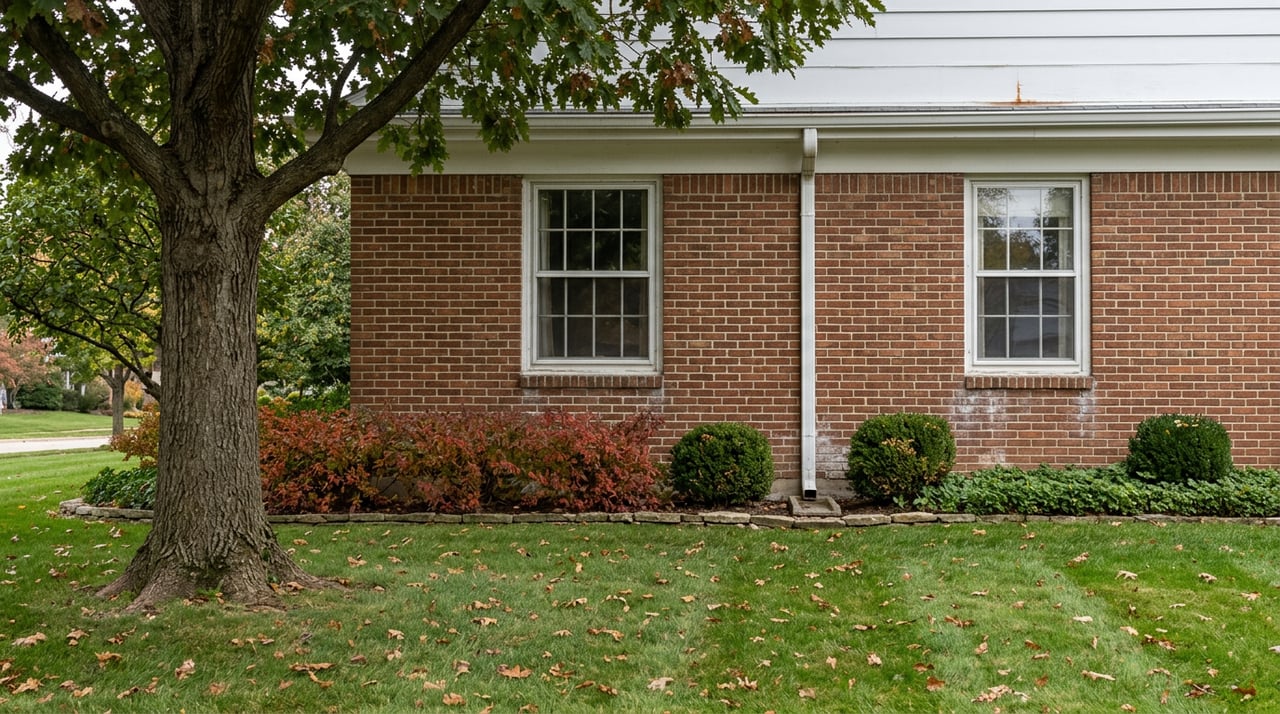
Bernards Township carries real depth of older housing stock, with the Franklin Corners Historic District and several individually listed sites on the state and national historic registers sitting alongside neighborhoods built across the 1950s through the 1970s, well before natural gas became the default heating fuel in this part of New Jersey. Homes from that era were routinely built with an oil tank buried in the yard, and when many of those properties later converted to gas, the tank itself was often left in place rather than removed.
The signs a home once had one are not always obvious from the driveway. A capped or cut copper line entering the foundation near an old furnace location, a fill or vent pipe partially hidden by landscaping, a barometric damper still sitting in the chimney, these are the clues an inspector looks for, and homeowners who have lived in a house for decades sometimes have no idea the evidence is there.
The document that does address this directly is New Jersey's Seller's Property Condition Disclosure Statement, which specifically asks about the presence of an underground storage tank, active, inactive, or abandoned in place.
That is why a buyer's inspector, not the town, ends up being the one who actually looks. A professional tank sweep uses metal detection and sometimes ground penetrating radar to locate a buried tank, and in most Somerset County transactions today it rides along with the standard home inspection rather than replacing it. If the sweep turns something up, the burden shifts again, this time to further testing to determine whether the tank has leaked.
Removal costs for a clean underground tank, no contamination found, typically run $2,000 to $4,500 in current New Jersey contractor pricing. If soil testing turns up contamination, that number moves into a different category entirely, with remediation adding another $3,000 to $15,000 or more depending on how far the petroleum migrated.
New Jersey does operate a state fund intended to help with exactly this kind of cost, but it was never designed to move at the pace of a real estate closing. Applicants can wait several years for a grant or loan review to come through, which means a homeowner facing a leaking tank discovered mid-transaction cannot lean on that program to solve the problem before the closing date arrives.
The town's paperwork was never built to catch this. And the one fund that might help with the cost operates on a timeline measured in years, not weeks. For a transaction that has to close on a specific date, that leaves exactly one workable path: find out before you list, not after you're under contract.
Once an inspector flags something suspicious, the practical sequence in Somerset County transactions typically runs several weeks: the sweep itself, a decision on further testing if a metallic object is found, soil sampling if warranted, and then permitting before any physical removal can begin. Contractors working this corner of New Jersey describe a full process, from initial flag to final documentation, that commonly takes four to eight weeks when a tank is confirmed. Permitting alone can add one to two weeks depending on the municipality.
Compare that to a standard New Jersey attorney review and inspection contingency window, which typically runs a matter of weeks rather than months, and the mismatch becomes obvious. A tank discovered during a routine inspection can outlast the contingency period entirely, forcing either an extension, a price adjustment, or a walk away. None of that is a town failure. It is simply what happens when a real environmental question surfaces on a legal timeline that was never built to accommodate it.
For anyone preparing to sell an older home in Basking Ridge or elsewhere in Bernards Township, the practical move is to treat the tank question as a pre-listing item rather than something to react to once a buyer's inspector raises it.
For buyers, the lesson runs the other direction. A clean disclosure form is not the same as a clean property. If the home was built before 1980 and has any history of oil heat, a tank sweep alongside the standard inspection is worth the modest cost relative to what it protects against.
Does the town's Construction Records Clearance check for a buried oil tank? No. It verifies permitted construction work was properly closed out. It does not include a site inspection for tanks.
Can I wait for state grant money to cover removal if one is found mid-sale? Realistically, no. Current review timelines for New Jersey's remediation fund run into years, not the weeks a closing allows.
A buried tank is not a reason to avoid an older Basking Ridge home, and it is not evidence of anything wrong with how a seller has kept up the property. It is simply a piece of this town's housing history that the standard paperwork was never designed to surface. Finding out early is the difference between a manageable line item and a closing date that has to move.
If you're weighing a sale in Basking Ridge, Bernardsville, or anywhere across the Somerset Hills and want a clear read on what your home's age and history might mean for a transaction, Karen Tyrell can walk through it with you. Get a Free Home Valuation to start the conversation before you list, not after an inspector finds something you didn't know was there.
This article is general information, not legal, tax or financial advice. Consult a qualified professional about your situation.
Stay up to date on the latest real estate trends.




Get assistance in determining current property value, crafting a competitive offer, writing and negotiating a contract, and much more. Contact me today.